






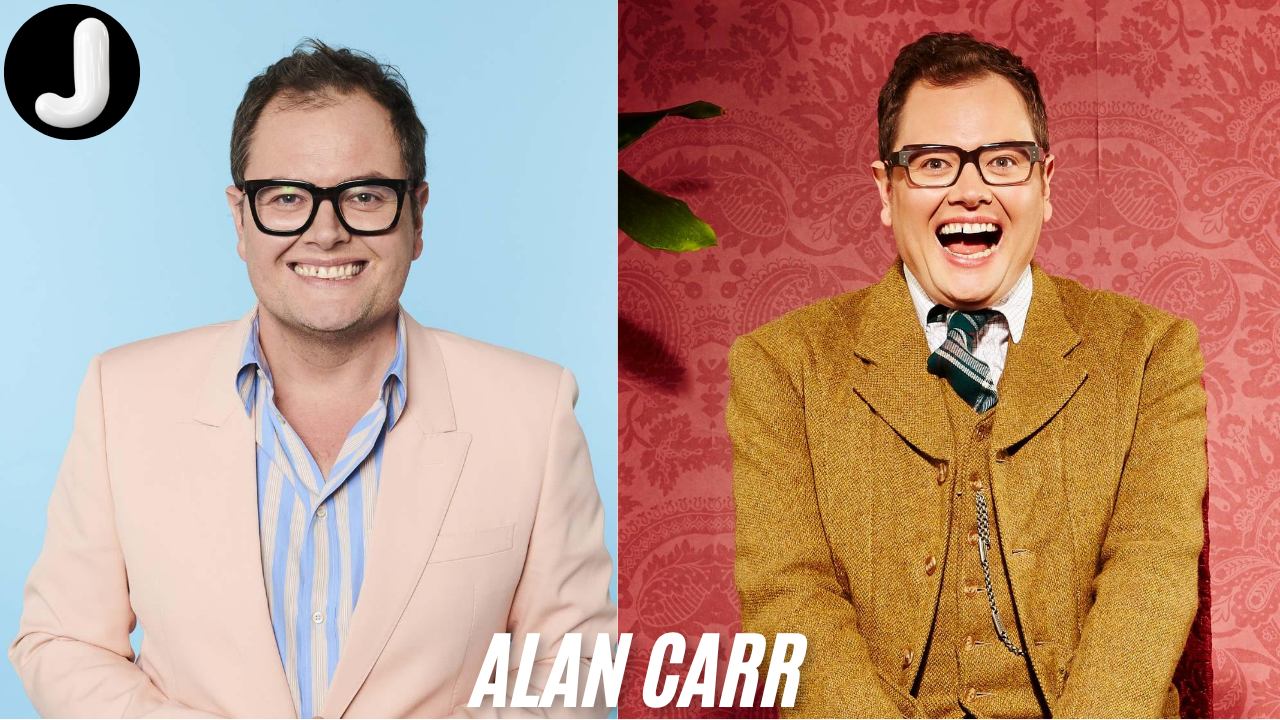
Few British entertainers have managed to stay relevant across stand-up comedy, television, radio, books, and reality TV quite like Alan Carr. Known for his distinctive laugh, quick wit, and relaxed interviewing style, Carr has built a career that spans more than two decades. While many comedians enjoy a brief moment in the spotlight, he has remained a familiar and popular figure on British screens by continually adapting to changing audiences and formats.
Whether people know him from Alan Carr: Chatty Man, his sold-out stand-up tours, RuPaul’s Drag Race UK, or more recent television projects, Carr has become one of the most recognizable personalities in British entertainment. His journey from performing in small comedy clubs to becoming a household name is a story of persistence, talent, and a unique ability to connect with audiences.
Who Is Alan Carr?
Alan Graham Carr was born on 14 June 1976 in Weymouth, Dorset, England. He spent much of his childhood in Northampton, where his father, Graham Carr, worked in professional football as a manager, scout, and coach. Growing up in a football-focused household might have suggested a sporting future, but Carr’s interests leaned toward performance and entertainment from an early age.
After completing his education, he attended Middlesex University, where he studied Drama and Theatre Studies. The course helped develop his confidence and stage presence, skills that would later become central to his career. Like many aspiring comedians, Carr did not move straight into television. Instead, he spent years performing in comedy clubs while holding regular jobs to support himself.
Those early years proved crucial. The experience taught him how to work a room, handle difficult audiences, and refine a style that would eventually make him one of Britain’s most successful comedians.
The Early Comedy Years
Carr’s professional comedy career began in the late 1990s on the Manchester comedy circuit. Manchester was known for producing strong stand-up talent, and Carr quickly established himself as a promising performer. His material often drew from personal experiences, social observations, and self-deprecating humor.
A major turning point arrived in 2001 when he won the BBC New Comedy Award. The same year, he also received the City Life Best Newcomer Award. These achievements brought industry attention and opened doors to television appearances.
Winning comedy competitions does not guarantee long-term success, but it gave Carr credibility at a critical stage of his career. Producers and broadcasters began to see him as more than a club comic. He was becoming a performer capable of reaching a national audience.
Building a Reputation Through Stand-Up
Stand-up remained the foundation of Carr’s success even as his television profile grew. Throughout the 2000s and 2010s, he toured extensively across the United Kingdom and Ireland.
His tours became known for combining polished material with spontaneous audience interaction. Carr’s comedy often focused on relationships, family dynamics, awkward social situations, celebrity culture, and everyday frustrations. Audiences responded because his observations felt familiar rather than distant.
Several of his live shows achieved strong commercial success. Tours such as Tooth Fairy Live, Spexy Beast Live, and Yap, Yap, Yap! attracted large audiences and generated strong DVD sales during a period when recorded stand-up was still a significant part of the entertainment market.
Unlike some comedians who rely heavily on controversy, Carr built his audience through personality and storytelling. His humor could be sharp, but it rarely felt hostile. That approach helped him appeal to viewers across different age groups.
Television Breakthrough
Carr’s television career began with guest appearances on panel shows and entertainment programs. However, his first major breakthrough came when he teamed up with Justin Lee Collins to host The Friday Night Project on Channel 4.
The show blended celebrity interviews, sketches, games, and audience participation. It gave Carr an opportunity to demonstrate skills beyond stand-up comedy. Viewers discovered that he was a natural presenter who could think quickly and make guests feel comfortable.
His success on The Friday Night Project led to additional television opportunities. Carr began appearing regularly on British panel shows, awards programs, and comedy specials.
By the late 2000s, he had become one of the most recognizable faces on British television.
The Success of Alan Carr: Chatty Man
If one program defines Carr’s career, it is Alan Carr: Chatty Man.
Launched in 2009 on Channel 4, the show quickly became one of Britain’s most popular celebrity chat programs. Running until 2016, it featured a mix of Hollywood stars, musicians, comedians, athletes, and reality television personalities.
What made Chatty Man different from many traditional interview shows was Carr’s relaxed style. Guests often appeared more comfortable and willing to share personal stories. Conversations felt less formal and more like a gathering among friends.
The program welcomed major international stars including Lady Gaga, Adele, Britney Spears, Elton John, David Beckham, and numerous actors promoting major films. Yet Carr treated famous guests and lesser-known personalities with the same level of enthusiasm.
The show’s popularity helped cement his status as one of Britain’s leading television hosts. For many viewers, Chatty Man represented a refreshing alternative to more structured celebrity interviews.
Expanding Into Television Hosting
Following the success of Chatty Man, Carr became one of the busiest presenters in British broadcasting.
He hosted entertainment specials, awards ceremonies, game shows, and comedy programs. His versatility allowed him to move between formats with ease.
One of his strengths has been his ability to maintain a recognizable personality while adapting to different types of television. Whether hosting a comedy panel, interviewing celebrities, or leading a game show, Carr brings a similar energy and sense of humor.
This consistency has helped him maintain audience loyalty even as television viewing habits have changed dramatically over the years.
Alan Carr and RuPaul’s Drag Race UK
Another important chapter in Carr’s career began with RuPaul’s Drag Race UK.
As a recurring judge, he became a familiar face to viewers of the British version of the internationally successful competition series. His role introduced him to younger audiences and strengthened his connection with LGBTQ+ viewers, who had long been a significant part of his fan base.
Carr’s contributions to the judging panel were generally praised for balancing humor with constructive feedback. His experience as a performer allowed him to understand the challenges contestants faced when creating memorable stage personas.
The show’s success further expanded his visibility beyond traditional comedy audiences.
Writing and Publishing Success
Carr’s talents extend beyond the stage and screen.
His autobiography, Look Who It Is!, became a bestseller after its release. The book offered readers an honest account of his childhood, career struggles, family life, and rise to fame.
Many reviewers noted that the writing reflected the same warmth and humor that audiences associated with his television appearances. Rather than presenting a carefully managed celebrity image, the memoir felt personal and candid.
The success of the book demonstrated that Carr’s appeal was not limited to live performance. Readers were interested in his perspective and personal experiences.
Personal Life and Public Interest
Carr has often spoken openly about aspects of his personal life, though he generally maintains a balance between privacy and public visibility.
His willingness to discuss topics such as confidence, identity, relationships, and career pressures has helped audiences relate to him. Unlike some celebrities who cultivate mystery, Carr’s popularity is partly rooted in his accessibility.
Many fans appreciate that he appears largely the same in interviews, television appearances, and live performances. That consistency has contributed to a reputation for authenticity.
Media coverage of Carr frequently focuses on his friendships within the entertainment industry, his home projects, travel adventures, and various television collaborations.
Recent Projects and Career Evolution
One reason Carr has remained relevant is his willingness to embrace new formats.
In recent years, he has continued appearing across a wide range of programs, including reality competitions, design shows, and entertainment specials. His partnership with Amanda Holden on travel and renovation-focused television projects introduced him to yet another audience segment.
Carr also hosts Picture Slam, a BBC game show that combines visual puzzles with entertainment. The program demonstrates his continued appeal as a presenter capable of carrying mainstream television formats.
At the same time, he remains active in comedy and continues to participate in projects that draw upon his strengths as a storyteller and entertainer.
Why Alan Carr Remains Popular
Many comedians achieve success through a single defining role. Carr’s career has lasted because he offers something broader.
His comedy is approachable without being bland. His interviews feel natural without appearing unprepared. His television work balances professionalism with spontaneity.
Perhaps most importantly, audiences trust him. Viewers generally know what they will get from an Alan Carr program: humor, warmth, curiosity, and genuine enthusiasm.
In an entertainment industry where trends change rapidly, those qualities have proved remarkably durable.
His ability to move between stand-up comedy, celebrity interviews, competition shows, documentaries, and game shows reflects a rare level of adaptability. Rather than resisting change, Carr has consistently found ways to evolve while staying true to the personality that first made audiences notice him.
Alan Carr’s Legacy in British Entertainment
It is difficult to discuss modern British comedy and television without mentioning Alan Carr.
He emerged during a period when panel shows, stand-up specials, and celebrity interviews dominated British entertainment. Yet he successfully navigated the industry’s shift toward streaming platforms, reality programming, and social-media-driven audiences.
Carr’s influence can be seen in a new generation of presenters who blend comedy with interviewing and personality-driven hosting. He helped demonstrate that warmth and relatability could be just as effective as confrontation or controversy.
His career also highlights the value of versatility. While many performers become associated with a single format, Carr has succeeded across multiple forms of entertainment.
That achievement places him among the most significant British television personalities of his generation.
Frequently Asked Questions
How old is Alan Carr?
Alan Carr was born on 14 June 1976. His age depends on the current date, but he is widely recognized as one of Britain’s most established comedians and television presenters.
What is Alan Carr famous for?
He is best known for his stand-up comedy career and for hosting the Channel 4 talk show Alan Carr: Chatty Man. He is also recognized for his work on RuPaul’s Drag Race UK and various game and entertainment shows.
Did Alan Carr start as a comedian?
Yes. Carr began his career as a stand-up comedian on the Manchester comedy circuit before moving into television presenting and entertainment hosting.
Has Alan Carr written a book?
Yes. His autobiography, Look Who It Is!, became a bestselling memoir and offers insight into his life, family background, and rise to fame.
What TV shows has Alan Carr hosted?
He has hosted numerous programs, including Alan Carr: Chatty Man, The Friday Night Project, Picture Slam, and several entertainment specials and competition shows.
Is Alan Carr still active in television?
Yes. Carr continues to work in television as a presenter, judge, comedian, and entertainer. He remains a regular presence on British television through various ongoing projects.
Conclusion
Alan Carr’s career is built on more than jokes. His success comes from an unusual combination of humor, empathy, and adaptability that has allowed him to thrive across multiple forms of entertainment.
From small comedy clubs in Manchester to some of Britain’s biggest television programs, he has consistently connected with audiences by being funny without losing his authenticity. Few performers manage to remain relevant for more than two decades, yet Carr continues to find new ways to engage viewers.
His story also reflects broader changes in British entertainment. As formats evolve and audience habits shift, Carr has shown that personality and genuine connection still matter.
For fans and newcomers alike, Alan Carr remains one of the most recognizable and enduring figures in modern British comedy.