









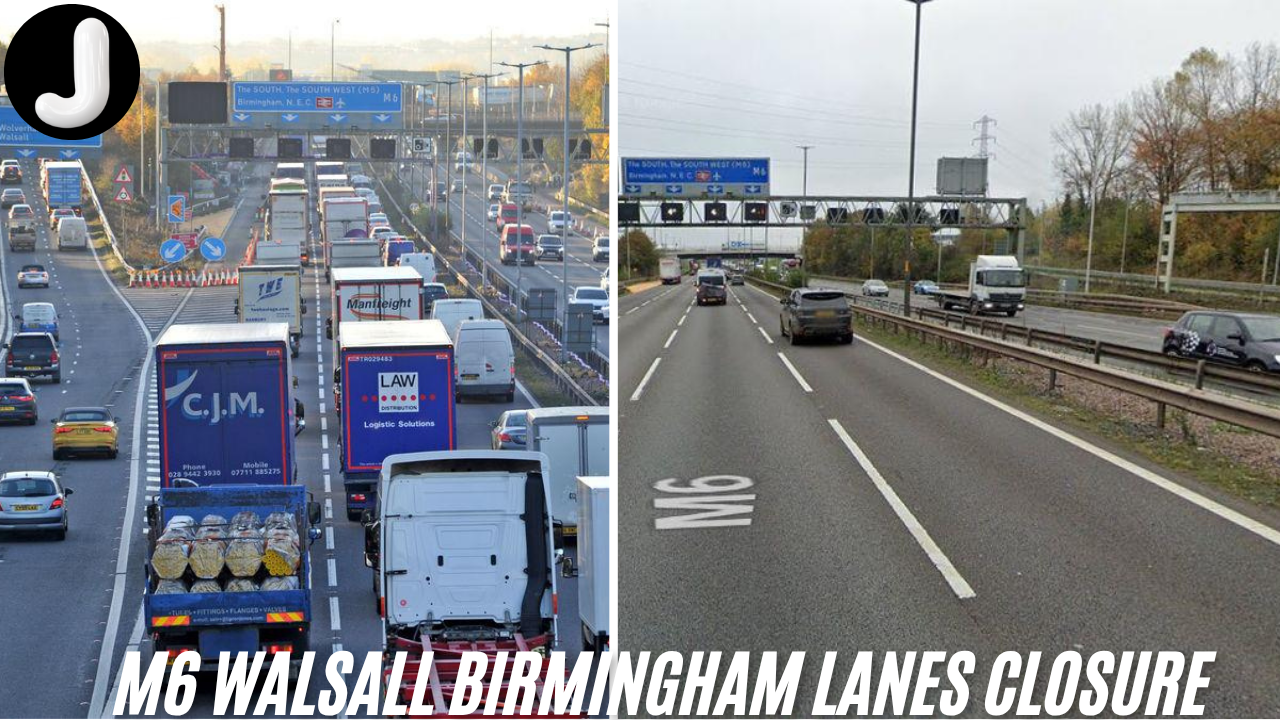
Traffic on the M6 between Walsall and Birmingham has been causing headaches for commuters and freight drivers alike. Lane closures along this busy stretch of motorway have disrupted journeys, slowed traffic, and raised questions about what is causing the delays and how long they will continue. Understanding the nature of these closures, the reasons behind them, and how they are managed can help drivers plan ahead and avoid unnecessary delays.
Overview of the M6 Corridor
The M6 motorway is one of the busiest in the UK, connecting the Midlands to northern and southern England. The section between Walsall, around Junction 10, and Birmingham’s Spaghetti Junction at Junction 6 carries thousands of vehicles every day, including commuters, delivery trucks, and long-distance travellers. Because of the high traffic volume, even minor maintenance work can lead to significant congestion.
Lane closures are used to protect road workers and motorists during maintenance, resurfacing, or technical upgrades. These closures are often temporary but can have a substantial impact on daily travel.
Why Lanes Are Closed
The M6 lane closures in this section are primarily due to routine maintenance and safety-related work. Resurfacing and repairing road surfaces ensure that the motorway remains safe and reliable. Over time, heavy traffic can cause wear and tear, including potholes and surface deterioration. Fixing these issues promptly prevents accidents and prolongs the life of the motorway.
In addition, the Walsall–Birmingham section forms part of the smart motorway network. Smart motorways use technology to monitor traffic flow and adjust lane availability or speed limits dynamically. Upgrades and testing of gantries, sensors, and overhead signs sometimes require closing lanes temporarily to provide safe access for engineers.
Finally, small adjustments following larger projects, such as bridge repairs or junction improvements, can necessitate temporary closures. Even after major work is complete, finishing touches or safety inspections may require lane restrictions.
Timing and Pattern of Closures
Most lane closures take place during overnight hours, typically from around 9 pm to 6 am. This timing helps reduce disruption during the busiest traffic periods while giving work crews a safe window to complete essential tasks.
Overhead gantries with Red X signs indicate which lanes are closed. Speed limits are reduced to guide traffic safely through narrower sections. Even if no workers are visible, these restrictions are enforced for safety reasons, such as allowing freshly applied road markings or concrete to set.
Drivers should note that lane closures are often scheduled in advance, but unexpected events, such as equipment failure or urgent repairs, can create additional temporary closures.
Impact on Commuters and Freight
The closures can significantly affect travel times, particularly during peak hours when delays on the motorway ripple into surrounding roads. Commuters may see journeys extended by 15–30 minutes or more, depending on the number of lanes closed and traffic conditions.
Secondary roads, including the A454 and A34, often experience higher congestion as drivers attempt to bypass the M6. While the M6 Toll provides an alternative route, it comes with a fee and its own traffic considerations. Planning ahead, checking live traffic updates, and adjusting travel times where possible are essential strategies for reducing delays.
Safety Considerations
Drivers must adhere to lane closures and reduced speed limits. Ignoring Red X signs or entering closed lanes is illegal and poses serious safety risks. Enforcement cameras are increasingly used along this section of the M6 to ensure compliance and protect both road users and workers.
Even when lanes appear closed without visible workers, these measures are based on traffic control and safety protocols. Adhering to the signage is essential for avoiding accidents and fines.
Tips for Navigating the M6
- Check live traffic updates: National Highways and traffic monitoring services provide real-time closure information.
- Plan alternative routes: Local roads or the M6 Toll may offer detours, though these may be slower or involve fees.
- Adjust travel times: Travelling outside peak hours can reduce delays significantly.
- Follow signs and speed limits: Compliance with Red X and speed restrictions keeps traffic flowing and ensures safety.
By staying informed and planning ahead, drivers can reduce the impact of lane closures and maintain smoother journeys along this busy corridor.
Long-Term Outlook
Lane closures on the M6 between Walsall and Birmingham are expected to continue intermittently throughout 2026. National Highways schedules work in short segments rather than closing the motorway entirely for months at a time. This approach balances the need for maintenance with the goal of minimizing disruption.
While temporary delays are inconvenient, the work ensures that the motorway remains safe and reliable for years to come. Drivers can expect a combination of overnight closures, smart motorway adjustments, and occasional minor repair work in the coming months.
Frequently Asked Questions
What causes the M6 Walsall–Birmingham lane closures?
The lane closures are primarily for maintenance, resurfacing, smart motorway upgrades, and safety inspections.
Are the closures due to accidents?
Most closures are planned maintenance. Accidents can occasionally cause unexpected lane closures, but these are separate incidents.
How long will the closures continue?
Closures occur intermittently throughout 2026, mainly overnight. There is no fixed end date, but work is scheduled to minimize disruption.
How can I check if a closure is happening today?
Drivers can use National Highways, Traffic England updates, navigation apps, or local radio to check current closures.
Is there an alternative route?
The M6 Toll is a paid alternative. Local roads like the A34 or A454 may also be used, but they may experience congestion during peak times.
What should I do if I encounter a Red X sign?
Do not enter a lane with a Red X. Reduce speed if required and follow the remaining lane guidance to ensure safety.
Will the closures improve the motorway?
Yes. The maintenance and upgrades help maintain road safety, smooth traffic flow, and long-term reliability of the M6 corridor.
Conclusion
The M6 between Walsall and Birmingham is a vital artery for the West Midlands, carrying commuters, commercial vehicles, and long-distance traffic every day. Lane closures, while inconvenient, are essential for maintaining safety, upgrading technology, and keeping the motorway operational.
Drivers who plan ahead, check live updates, and follow safety guidance can navigate these closures with minimal disruption. The temporary inconvenience is a necessary step to ensure the motorway continues to meet the demands of the region’s traffic for years to come.
The story of the M6 closures is ultimately one of careful planning, safety, and long-term investment in a road network that supports millions of journeys across the Midlands and beyond.