









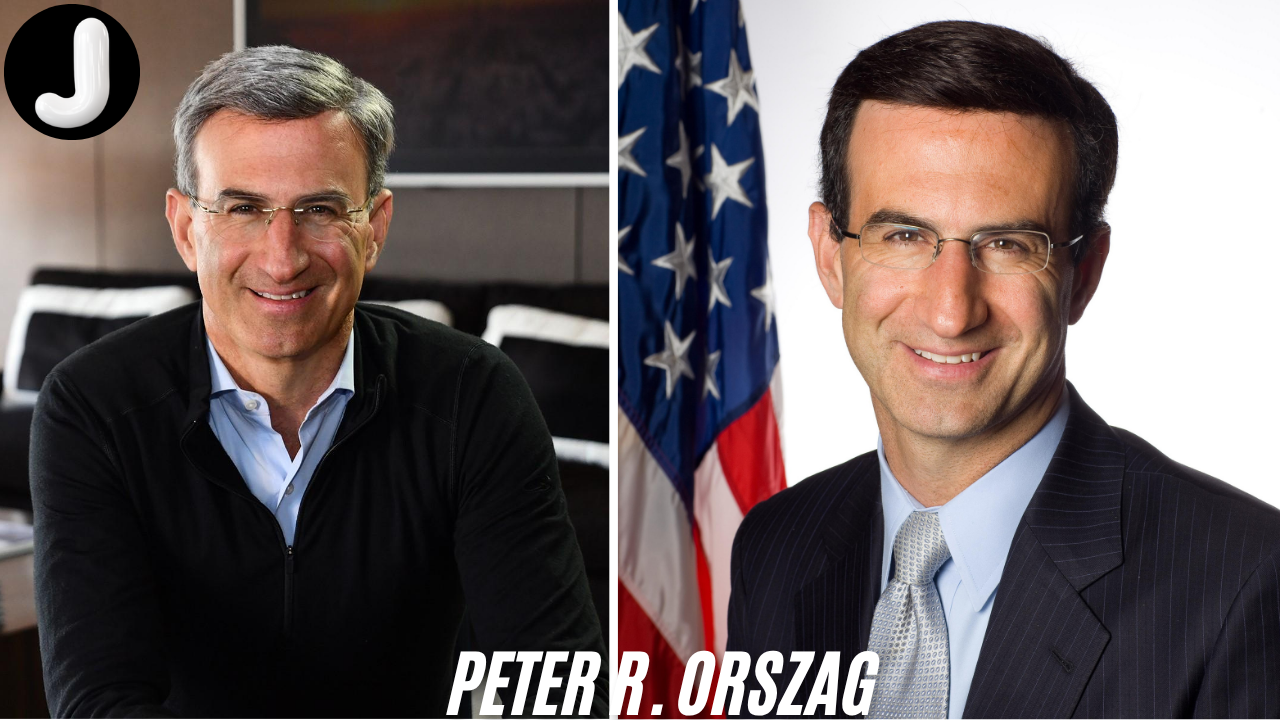
Peter R. Orszag has spent a career at the intersection of government, academia, and finance, earning a reputation as one of the most influential economic thinkers of his generation. Known for his deep understanding of fiscal policy, healthcare economics, and financial strategy, Orszag has moved fluidly between shaping public policy and leading major global institutions. Today, he serves as the CEO and chairman of Lazard, one of the world’s foremost financial advisory firms.
Orszag’s journey from economic researcher to government advisor to corporate leader reflects both his intellectual rigor and his ability to translate complex policy ideas into practical solutions. Readers interested in Orszag typically want to know who he is, what contributions he has made to public policy, and how his career evolved to make him a leader in global finance. His biography reveals a pattern of disciplined thinking, public service, and strategic leadership.
Early Life and Education
Peter Richard Orszag was born on December 16, 1968, into a family that valued education and intellectual achievement. His father, Steven Orszag, was a distinguished mathematician, and this environment encouraged a strong commitment to learning from an early age. Orszag attended Phillips Exeter Academy, one of the most prestigious preparatory schools in the United States, where he demonstrated both academic excellence and an interest in economics.
Following high school, Orszag enrolled at Princeton University, graduating summa cum laude with a degree in economics. He was elected to Phi Beta Kappa, reflecting outstanding scholastic achievement, and he developed an early focus on fiscal policy and economic modeling. After Princeton, Orszag was awarded a Marshall Scholarship to the London School of Economics, where he earned a master’s degree and a Ph.D. in economics. His academic background laid the foundation for a career that would blend rigorous research with applied policy and financial strategy.
Early Career in Economics and Research
Orszag began his professional life in economic research and public policy analysis. He worked at the Brookings Institution, a leading think tank, where he focused on fiscal policy, healthcare economics, and long-term budget issues. His research at Brookings emphasized data-driven approaches and sought practical solutions to pressing economic challenges, from retirement security to federal deficit management.
During this period, Orszag became involved with The Hamilton Project, a policy initiative aimed at improving economic policy through research and evidence-based recommendations. This work helped establish his reputation as a thoughtful, disciplined economist capable of translating complex economic data into policy advice.
Government Service: Clinton Administration
Orszag’s first major government role came during the Clinton administration, where he served on the Council of Economic Advisers and later as Special Assistant to the President for Economic Policy. These positions allowed him to contribute directly to federal budgeting and economic planning, providing him with hands-on experience in how policy is crafted and implemented at the highest levels of government.
Although these roles did not bring him widespread public recognition, they built the foundation for his later influence on U.S. fiscal and healthcare policy.
Congressional Budget Office Leadership
In 2007, Orszag became the director of the Congressional Budget Office (CBO), the nonpartisan agency responsible for providing Congress with independent analyses of fiscal policy, spending programs, and legislative proposals. As CBO director, he focused on long-term fiscal challenges, particularly the unsustainable trajectory of healthcare spending and federal entitlement programs.
Under his leadership, the CBO expanded its focus on healthcare policy, producing reports that informed debates on reform, costs, and sustainability. His tenure emphasized evidence-based policy evaluation and earned him a reputation as a reliable, data-focused advisor whose projections shaped critical decisions in Congress.
Director of the Office of Management and Budget
In 2009, President Barack Obama appointed Orszag as director of the Office of Management and Budget (OMB), placing him at the center of the federal government’s budgetary decision-making during a period of economic recovery following the global financial crisis. At OMB, Orszag oversaw federal budget development, monitored spending, and advised the president on fiscal and economic policy.
One of his key responsibilities involved healthcare reform, where his expertise in healthcare economics proved invaluable in assessing the fiscal impact of proposed policies. Orszag also worked to balance short-term stimulus measures with long-term budget sustainability. Though the work was often politically charged, his approach remained grounded in economic analysis and careful forecasting.
He left OMB in 2010, having served approximately eighteen months in the role, and transitioned into the private sector.
Transition to Finance
After leaving government service, Orszag joined Citigroup as vice chairman of corporate and investment banking. In this role, he advised clients on strategic issues that often intersected with public policy, regulation, and economic trends. His ability to understand both government processes and financial markets set him apart from many traditional investment bankers.
At Citigroup, Orszag’s responsibilities included developing strategies for clients navigating regulatory changes and complex fiscal environments. This experience marked the beginning of his pivot from public policy to corporate leadership.
Rise at Lazard
In 2016, Orszag joined Lazard as vice chairman of investment banking, quickly taking on leadership roles within the firm. He served as head of North American mergers and acquisitions and later as global co-head of healthcare. These positions leveraged his expertise in both finance and policy, offering clients guidance that considered regulatory, economic, and strategic factors.
By 2019, Orszag had become CEO of Lazard’s Financial Advisory business, overseeing advisory services for corporations, governments, and institutions worldwide. His background in economics and policy gave him a unique perspective in advising clients on complex transactions and financial strategies.
CEO and Chairman of Lazard
In 2023, Orszag was appointed CEO of Lazard, and in 2025, he became both CEO and chairman of the firm. Under his leadership, the company has emphasized integrating economic insights, policy awareness, and strategic advisory services to navigate global financial markets. His dual experience in government and finance allows him to lead Lazard with a perspective that considers both market dynamics and broader economic trends.
Ongoing Influence and Board Memberships
Beyond his corporate role, Orszag continues to influence public policy and economic discussions. He serves on the boards of the National Academy of Medicine, the Council on Foreign Relations, and the Peterson Institute for International Economics. These affiliations reflect his continued engagement with economic research, public policy, and healthcare issues.
Orszag also contributes to discussions on fiscal responsibility, healthcare spending, and economic growth through publications, interviews, and speaking engagements, maintaining a presence in both financial and policy spheres.
Personal Life
Peter Orszag is married to Bianna Golodryga, a well-known journalist and television correspondent. While maintaining a low personal profile, Orszag’s life reflects a balance between public service, corporate leadership, and family. He continues to engage with educational, healthcare, and policy initiatives, emphasizing evidence-driven solutions and long-term planning.
Why Peter Orszag Matters
Orszag’s career demonstrates the value of bridging sectors. Few individuals have held senior government economic positions and then transitioned to leading one of the world’s major financial institutions. His work underscores how understanding public policy can provide critical insights for business strategy and vice versa. In an era where finance and policy are increasingly intertwined, Orszag’s career provides a model for navigating complexity with both analytical rigor and practical leadership.
Frequently Asked Questions
Who is Peter R. Orszag?
Peter R. Orszag is an economist, former government official, and CEO and chairman of Lazard, with prior roles including CBO and OMB director.
What did he do in government?
He led the Congressional Budget Office and the Office of Management and Budget, focusing on fiscal policy, healthcare reform, and federal budgeting.
Where did he study?
Orszag earned a bachelor’s degree in economics from Princeton University and a master’s and Ph.D. in economics from the London School of Economics.
What is his role at Lazard?
He is CEO and chairman, overseeing global financial advisory services and strategy.
Is he still involved in policy discussions?
Yes, through board memberships and public speaking on economic and healthcare policy.
Who is his spouse?
He is married to Bianna Golodryga, a journalist and correspondent.
What is his leadership style?
Orszag emphasizes evidence-based decision-making, integrating insights from policy, economics, and financial markets.
Conclusion
Peter R. Orszag’s career spans government, policy research, and corporate finance, reflecting a rare combination of analytical skill and leadership. From directing the nation’s fiscal strategy to advising global institutions, he has consistently leveraged deep economic understanding to shape decisions at the highest levels.
His trajectory illustrates the value of crossing traditional boundaries between sectors, applying rigorous analysis to practical challenges. As CEO and chairman of Lazard, Orszag continues to influence both business strategy and public discourse, demonstrating how expertise in economics can guide complex decisions in an interconnected world.
For aspiring economists and policymakers, Peter Orszag’s path offers a blueprint: combine rigorous education, public service, and strategic insight to create impact across multiple arenas.