








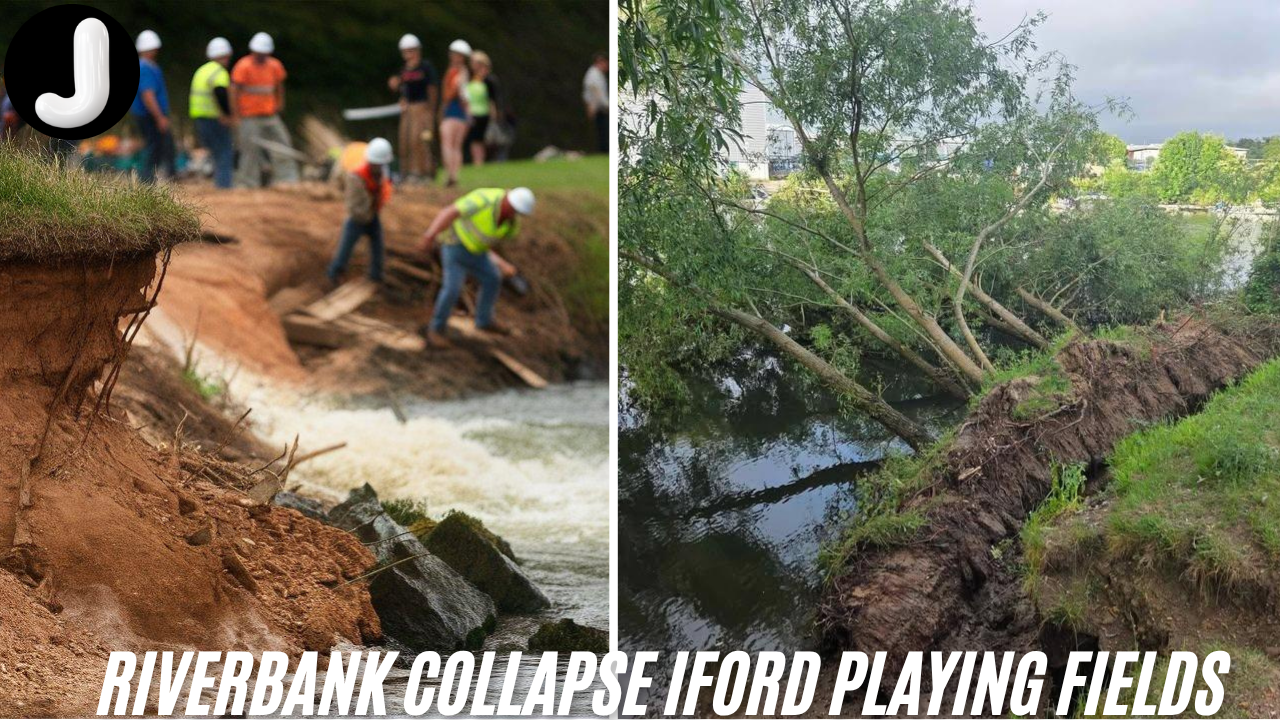
The sudden riverbank collapse at Iford Playing Fields has become a major talking point for residents, environmental groups, and local authorities in the Christchurch and Bournemouth area. What was once a familiar stretch of riverside landscape along the River Stour has been dramatically altered after a substantial section of the bank gave way, leaving behind unstable ground, fallen trees, and growing concerns about public safety.
The incident attracted widespread attention because Iford Playing Fields is a well-used community space that serves local sports clubs, walkers, cyclists, dog owners, and families. The collapse not only changed the appearance of the area but also raised questions about riverbank erosion, flood risks, environmental management, and the future of riverside recreation spaces.
As investigations and monitoring continue, many people are looking for clear information about what happened, why it happened, and what steps may be taken to prevent similar incidents in the future. Understanding the collapse requires examining both the immediate event and the wider environmental factors that have been affecting the River Stour for many years.
What Happened at Iford Playing Fields?
The riverbank collapse was first widely reported in late May 2025 after residents noticed a large section of land along the River Stour had disappeared. The affected area stretched for more than 50 metres in some reports, making it one of the most significant riverbank failures seen in the area in recent years.
Witnesses described seeing large sections of soil collapse into the river. Several mature trees that had stood along the bank were pulled into the water when the ground supporting their root systems gave way. The resulting scene showed exposed earth, broken vegetation, and a dramatically altered riverside landscape.
For many local residents, the scale of the collapse came as a surprise. Although signs of erosion had been visible over time, few expected such a large section of the riverbank to fail in a relatively short period. The sudden nature of the event highlighted how quickly erosion-related problems can escalate when environmental conditions reach a tipping point.
Local authorities responded quickly by assessing the site and introducing safety measures to protect visitors from further risks.
The Importance of Iford Playing Fields to the Community
Iford Playing Fields is much more than an open recreational area. Located near Iford Bridge and running alongside the River Stour, the site plays an important role in the daily lives of many local residents.
The playing fields provide space for sports activities, informal recreation, walking routes, and access to the riverside environment. During warmer months, the area attracts visitors interested in kayaking, paddleboarding, fishing, and nature observation. Its location makes it one of the most accessible green spaces for nearby communities.
The surrounding landscape also contributes to local biodiversity. Mature trees, riverside vegetation, and natural habitats support birds, insects, fish, and other wildlife. Because of this, any significant change to the riverbank affects not only public access but also the wider ecological health of the area.
The collapse therefore represents both a public safety issue and an environmental concern that requires careful management.
Understanding Riverbank Erosion Along the River Stour
To understand why the collapse occurred, it is necessary to look at the natural process of riverbank erosion. Rivers are constantly reshaping their channels. As water flows downstream, it removes soil and sediment from certain locations while depositing material elsewhere.
Along the River Stour, erosion has long been part of the river’s natural behavior. Water moving against the riverbank gradually weakens the soil, particularly during periods of high flow. Over months and years, this process can remove the lower support structures beneath the bank, making the land above increasingly unstable.
The lower reaches of the Stour are especially vulnerable because of changing water levels and the influence of seasonal weather patterns. Heavy rainfall can increase river flow significantly, accelerating erosion and placing greater pressure on already weakened sections of the bank.
Although erosion is a natural process, its effects can become more noticeable when public spaces and infrastructure are located close to the river’s edge.
Weather Conditions and Their Role in the Collapse
Weather appears to have played a major role in the events leading up to the collapse. Before the incident, the region experienced periods of prolonged rainfall that left the ground heavily saturated.
When soil becomes saturated, water fills the spaces between soil particles and reduces the strength that normally holds the ground together. The bank becomes heavier while simultaneously losing some of its ability to support its own weight. This creates conditions where sections of land may suddenly fail.
Strong winds may have added additional pressure. Large riverside trees place considerable weight on the soil beneath them. If the ground is already weakened, the combined effect of saturated soil and tree weight can contribute to instability.
Environmental experts often describe these incidents as the result of multiple factors working together rather than a single cause. In the case of Iford Playing Fields, erosion, rainfall, soil saturation, and vegetation likely combined to produce the collapse.
Public Safety Concerns Following the Incident
One of the immediate concerns after the collapse was public safety. Riverbank failures create hazards that are not always visible to visitors.
Ground near the edge may appear solid while hiding cracks, voids, or unstable sections underneath. A person walking too close to the damaged area could unknowingly trigger further collapse. Children and pets are particularly vulnerable because unstable ground can be difficult to recognize.
The collapse also introduced hazards within the river itself. Fallen trees, branches, and submerged debris can create obstacles for paddleboarders, kayakers, and other water users. In some cases, hidden debris may become trapped below the surface and pose risks during periods of higher water flow.
These concerns prompted authorities to install warning signs and restrict access to the most affected areas while further assessments were carried out.
The Environmental Impact of the Collapse
The environmental effects of the collapse extend beyond the visible damage. The loss of mature trees is one of the most obvious consequences. Trees provide habitat for wildlife and help stabilize riverbanks through their extensive root systems.
When trees fall into a river, however, the ecological impact is not entirely negative. Fallen wood can create valuable habitat for fish, aquatic insects, and other species. Natural river systems often rely on woody debris to create shelter, slow water flow, and increase biodiversity.
The challenge facing environmental managers is balancing ecological benefits with public safety requirements. While some fallen trees may contribute positively to river ecosystems, others may need to be removed if they create hazards or increase erosion elsewhere.
Long-term environmental assessments will likely help determine the best approach for managing the affected area.
How Local Authorities Are Responding
Following reports of the collapse, Bournemouth, Christchurch and Poole Council began monitoring the site and implementing safety measures. Temporary barriers and warning notices were installed to keep visitors away from unstable sections of the riverbank.
Council representatives acknowledged the seriousness of the incident and indicated that assessments were underway to determine the extent of the damage. Engineers and environmental specialists are expected to play an important role in evaluating both the causes of the collapse and possible solutions.
Monitoring remains critical because riverbanks can continue moving after an initial failure. Additional rainfall or changing river conditions could affect nearby sections of the bank and increase the risk of further instability.
Authorities must therefore balance public access with safety considerations while planning future restoration work.
Could Climate Change Be a Contributing Factor?
While no single collapse can be directly linked to climate change, scientists have repeatedly warned that changing weather patterns are increasing erosion and flood risks in many parts of the United Kingdom.
Warmer temperatures can lead to more intense rainfall events. Heavier rainfall increases runoff, raises river levels, and accelerates erosion. Areas located near rivers may therefore experience greater pressure on embankments and natural flood defenses.
Research from environmental agencies suggests that many rivers across the country are already experiencing shifts in flow patterns. These changes may increase the frequency of erosion-related incidents, particularly in locations where public spaces are situated close to waterways.
The collapse at Iford Playing Fields reflects broader challenges that communities may increasingly face as weather patterns continue to evolve.
What Repairs and Restoration Work Might Be Needed?
Repairing a damaged riverbank requires careful planning. Engineers typically begin by assessing the stability of the remaining land and identifying the factors that contributed to the failure.
One possible approach involves hard engineering methods such as retaining structures, rock armor, or reinforced embankments. These measures can provide strong protection but may alter the natural appearance of the river corridor.
Alternative solutions focus on softer environmental techniques. These can include planting deep-rooted vegetation, restoring natural bank profiles, improving drainage systems, and encouraging natural stabilization processes. Such methods often support wildlife while reducing erosion risks.
The final decision will depend on technical assessments, environmental considerations, available funding, and long-term maintenance requirements.
What the Incident Means for the Future of Riverside Spaces
The collapse at Iford Playing Fields highlights the ongoing challenge of managing riverside environments that serve both people and nature. Communities increasingly value access to green spaces, yet these areas are often located within dynamic natural systems that are constantly changing.
Rivers do not remain fixed in place. They move, erode, flood, and reshape their surroundings over time. Public parks, footpaths, and recreational facilities located near rivers must therefore be managed with an understanding of these natural processes.
The incident also serves as a reminder that monitoring and maintenance are essential. Early signs of erosion may not always seem urgent, but addressing problems before they become severe can help reduce risks and avoid costly repairs later.
As authorities continue their assessments, the lessons learned from this collapse may influence how similar riverside locations are managed across the region.
Frequently Asked Questions
When did the riverbank collapse at Iford Playing Fields occur?
The collapse became widely reported in late May 2025 after local residents observed significant damage along the River Stour. Reports suggested that a substantial section of the riverbank had failed during this period.
How much of the riverbank was affected?
Local reports indicated that more than 50 metres of riverbank were impacted. The collapse included sections of land supporting mature trees, many of which fell into the river.
Is the area safe to visit?
Most of Iford Playing Fields remains accessible, but visitors should follow all warning signs and avoid restricted areas. Authorities introduced safety measures because unstable ground may remain near the damaged riverbank.
What caused the collapse?
The collapse appears to have resulted from a combination of long-term erosion, saturated soil, heavy rainfall, and the natural forces acting on the River Stour. Investigations continue to assess the precise contributing factors.
Will the riverbank be repaired?
Local authorities are evaluating options for restoration and stabilization. Any long-term solution will likely involve engineering assessments, environmental reviews, and funding considerations.
Could similar collapses happen elsewhere?
Riverbank erosion occurs naturally in many river systems. Areas experiencing prolonged rainfall, high river flows, and unstable soil conditions may face similar risks if preventive measures are not implemented.
Conclusion
The riverbank collapse at Iford Playing Fields is a striking example of how natural forces can reshape familiar landscapes. What appeared to be a stable riverside environment changed dramatically when erosion, weather conditions, and saturated soil combined to undermine the bank.
For local residents, the immediate concern remains safety and the protection of a valued community space. Authorities continue to monitor conditions while experts assess the best path forward for restoration and stabilization.
The incident also highlights the wider challenges facing riverside communities across the United Kingdom. As weather patterns change and environmental pressures increase, managing erosion and flood risks will become an increasingly important part of protecting public spaces.
The future of Iford Playing Fields will depend on informed decisions, careful environmental management, and continued monitoring. Those efforts will help ensure that this important riverside location remains safe and accessible for future generations.