








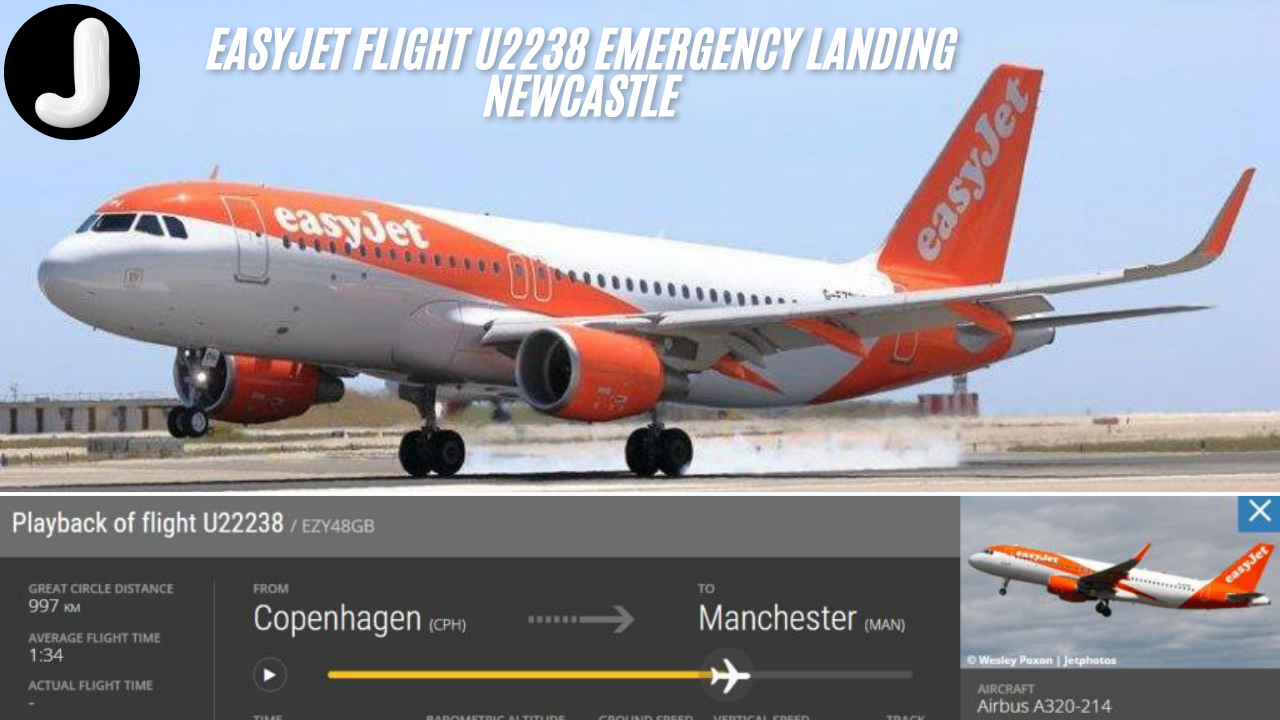
On October 27, 2025, easyJet flight U2238, en route from Copenhagen to Manchester, made an unscheduled emergency landing at Newcastle Airport after a passenger welfare issue arose onboard. The Airbus aircraft safely diverted under the guidance of its crew, highlighting the airline’s emergency protocols and the preparedness of Newcastle Airport’s response teams. Passengers were attended to promptly, and the situation was handled without incident.
Scheduled Flight and Routine Operations
Flight U2238 was a standard service operated by easyJet, carrying passengers across the North Sea into UK airspace. The journey from Copenhagen to Manchester typically takes around two hours and passes over several European and UK air traffic zones. On the day of the incident, the flight initially departed on time and was cruising at a standard altitude when the situation requiring diversion arose.
The aircraft’s crew followed normal procedures for monitoring passenger welfare, cabin safety, and flight systems. All onboard communications and navigation equipment functioned as expected, allowing the crew to coordinate efficiently with air traffic control.
The Medical Welfare Issue
Approximately midway through the flight, a passenger experienced a serious medical situation. While details about the individual remain private, the crew determined that immediate medical attention was required. According to standard airline protocols, the safest and fastest way to ensure proper care was to divert the flight to the nearest suitable airport, which in this case was Newcastle.
Medical emergencies onboard an aircraft can range from acute illness to injury. Flight attendants are trained in first aid and emergency response, and they work closely with the pilots to assess whether a diversion is warranted. In this instance, the welfare of the passenger took priority over reaching the original destination.
Emergency Declaration and Air Traffic Coordination
When the pilot declared an emergency, the aircraft was given priority handling by air traffic controllers. Emergency declarations in aviation alert all relevant authorities that a flight requires immediate attention, ensuring a clear path for landing and mobilizing ground emergency services.
For U2238, this meant coordinating with Newcastle Airport to secure an available runway and have medical teams and emergency vehicles ready on the tarmac. Such procedures are standard in commercial aviation and are designed to minimize risks and maximize response readiness.
Safe Landing at Newcastle Airport
The aircraft landed safely at Newcastle Airport, where paramedics and airport emergency staff were waiting. Passengers disembarked normally, and the affected individual received medical attention without delay. The remaining travelers were subsequently assisted in continuing their journey to Manchester once the situation was resolved.
The diversion caused minimal disruption for other airport operations, as Newcastle Airport maintains robust protocols for handling unscheduled arrivals. EasyJet staff worked alongside airport authorities to ensure passenger care, providing information and support as needed.
Airline Response and Passenger Support
easyJet has policies to manage passenger welfare during diversions. While compensation is generally governed by UK and EU regulations, medical emergencies typically fall outside automatic financial claims. Nevertheless, airlines provide support such as rerouting, accommodation if necessary, and assistance with onward travel. In this case, passengers were accommodated and guided to complete their intended trip safely.
The airline also communicated with authorities and followed internal reporting procedures. Such incidents, while uncommon, reinforce the importance of crew training, coordination, and adherence to safety protocols.
Understanding Diversions in Aviation
Emergency landings are not uncommon in commercial aviation. Diversions occur for reasons such as passenger medical emergencies, technical issues, weather disruptions, or airport closures. Pilots are trained to make rapid, informed decisions to safeguard passengers and crew.
In many cases, a diversion is a precautionary measure rather than a sign of mechanical failure. The quick response by flight crews and air traffic authorities demonstrates the industry’s commitment to safety and operational integrity.
Passenger Experience and Guidance
Passengers on diversions should remain calm and follow crew instructions. Clear communication, compliance with safety procedures, and patience during the landing and subsequent assistance process help ensure a smooth experience. Airlines strive to minimize stress and provide timely support for onward travel.
The crew’s ability to maintain a safe and controlled environment, along with the airport’s readiness, often means passengers are largely unaware of the complexities involved in managing such events.
Lessons from Flight U2238
The emergency landing of easyJet flight U2238 underscores several key points:
- Aviation systems are designed for redundancy and rapid response.
- Crew training in medical and operational emergencies is critical.
- Airports maintain robust emergency response protocols to handle diversions efficiently.
- Passenger welfare takes precedence, even if it requires deviation from planned schedules.
The event reinforces public confidence in commercial air travel’s safety procedures, highlighting how coordination between pilots, cabin staff, and airport services ensures positive outcomes in unexpected situations.
Conclusion
Flight U2238’s diversion to Newcastle Airport on October 27, 2025, illustrates how modern aviation manages in-flight emergencies responsibly. A serious passenger welfare issue prompted the crew to take decisive action, resulting in a safe landing with prompt medical support.
While diversions can cause temporary inconvenience, they are a critical part of aviation safety culture. The handling of U2238 reflects effective training, preparedness, and coordination, ensuring passengers’ well-being remained the top priority.
For travelers, the event serves as a reminder that commercial air travel is structured to respond quickly to emergencies, and passengers can rely on both airline crews and airport services to manage situations professionally.
Frequently Asked Questions
What caused easyJet flight U2238 to divert to Newcastle?
The flight diverted due to a passenger welfare emergency. The crew determined immediate medical attention was required.
Was there any technical problem with the aircraft?
No. All reports confirm the aircraft was mechanically sound; the diversion was driven solely by a medical situation.
Were all passengers safe?
Yes. The aircraft landed safely, and all passengers were assisted. Emergency services attended the affected individual immediately.
How long was the delay caused by the diversion?
Specific timing was not publicly reported, but passengers were able to continue their journey to Manchester after the medical situation was managed.
Do passengers get compensation for diversions?
Compensation is usually determined under UK and EU law. Medical emergencies are typically outside automatic compensation rules, but airlines provide rerouting and assistance.